
We Built the Foundation.
Now Here It Is.
Most of the conversation about AI in HR is happening at 30,000 feet. Big claims. Vague promises. A lot of noise about what AI could do, and very little honest guidance on how HR leaders are supposed to actually lead through it.
That gap is exactly why the Human-Centric AI Council exists.
When we launched HCAIC, we weren't interested in adding to the noise. We were interested in building something useful — a body of work that HR leaders could actually put to work as AI moved from conversation to operations. Something grounded in practitioner experience, not vendor ambition.
That work is now done. And today, we're making it available.
Introducing the HCAIC Transformation Toolkit
The HCAIC Transformation Toolkit is a set of four interconnected resources, developed over the past year by council members who have lived the challenges these tools are designed to address.
Together, they cover the full arc of what HR needs before AI can be scaled responsibly: literacy, change management, evaluation discipline, and governance.
These aren't white papers written to check a box. They're working tools. Built by practitioners, for practitioners.
Here's what's in the toolkit.
Resource 01
AI Literacy Toolkit & Applied Learning Course
Led by Rachel Bourne and Melissa Laswell · Powered by CodeSignal


AI literacy isn't a training problem. It's a leadership problem.
HR leaders are being asked to evaluate vendors, govern AI systems, support workforce adaptation, and make consequential decisions about technology — all without a clear foundation for understanding what AI actually does (or doesn't do). The gap isn't at the practitioner level. It's at the top.
The AI Literacy Toolkit gives HR leaders the foundation to ask better questions, make better decisions, and lead with credibility in the conversations where AI is on the table.
The applied learning course (powered by CodeSignal) translates that foundation into a structured, actionable experience — not a one-time training event, but a capability-building resource leaders can use and return to as the technology keeps evolving.
Resource 02
AI Change Management Ebook
Led by Alicia Miller

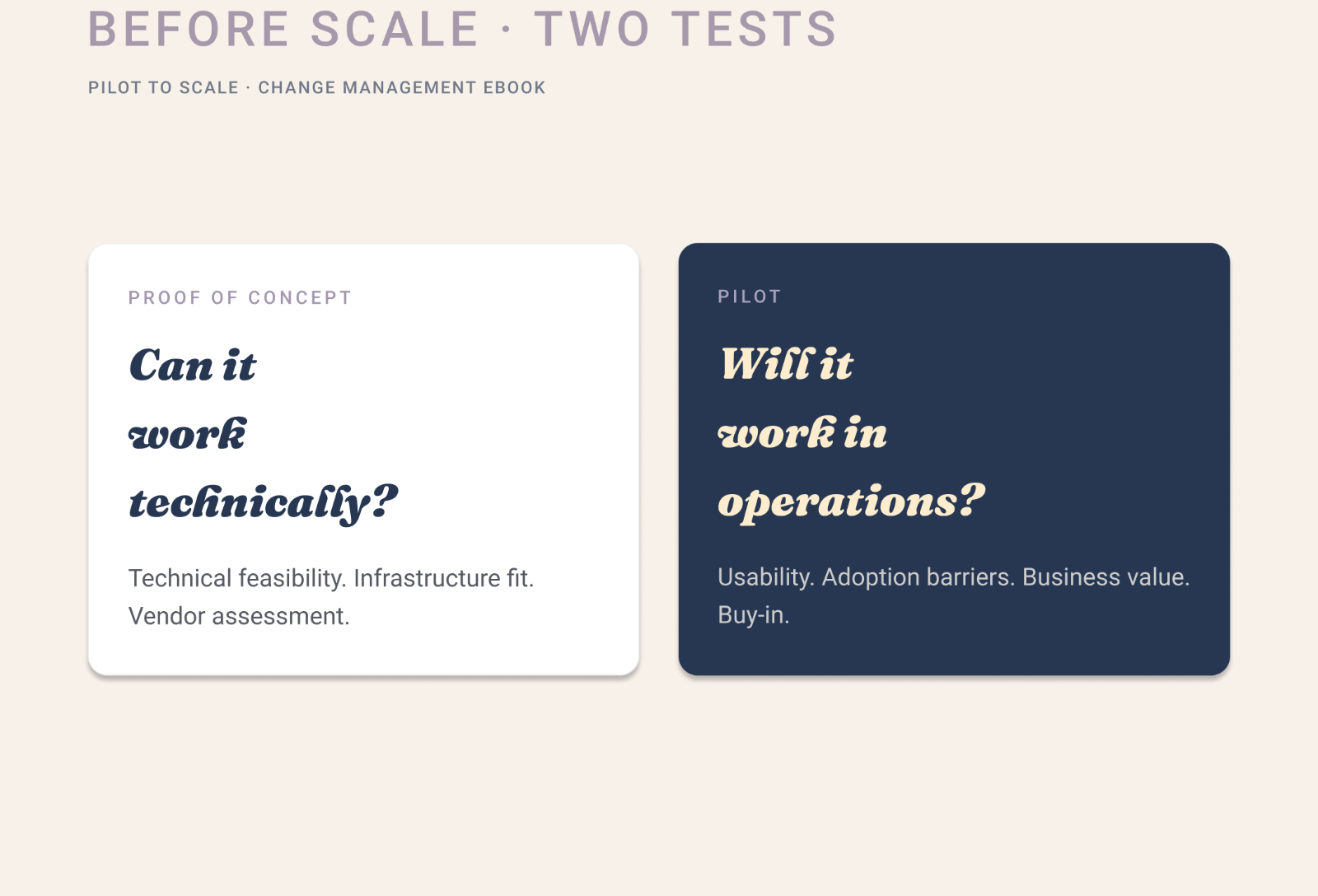
Most AI rollouts don't fail because of the technology. They fail because organizations treat AI like a software upgrade — and it isn't one.
AI changes work. It changes expectations, workflows, trust, and how decisions get made. Traditional change management rhythms are too slow and too static to absorb that kind of continuous disruption. Leaders want speed and measurable outcomes. Employees want clarity and stability. The technology keeps moving. All three tensions are real, and they don't resolve on their own.
"All three tensions are real, and they don't resolve on their own."
Alicia Miller led the development of this ebook to give HR leaders a practical framework for navigating that complexity: how to build trust, support adoption, and help people adapt as AI reshapes the work around them. If your AI efforts are stalling in pilot — or struggling to make it past pilot at all — this is the resource to start with.
Resource 03
AI Solution Evaluation & Design Framework
Led by Lydia Wu

The most expensive AI mistake HR organizations make isn't choosing the wrong vendor. It's committing to the wrong path.
AI decisions in HR aren't just procurement decisions anymore. They're architectural decisions — about data, governance, workflows, capability ownership, and how work gets done. Whether to buy, build, configure, or partner isn't just a budget question. It's a question about what kind of organization you're designing, and what you'll be living with for years.
Lydia Wu led the development of a framework that helps HR leaders think through exactly that: not just what use case they're pursuing, but what kind of decision they're actually making and what the tradeoffs of different approaches look like in practice. This is the resource to use before you sign anything — and before you scope anything.
Resource 04
Responsible AI Transformation Framework
Led by Susan Jackson and Tara Torres


Most HR teams are no longer debating whether to use AI. They're trying to figure out how to use it safely, effectively, and without breaking trust — and delivering on all three at once is genuinely hard.
Responsible AI in HR isn't a compliance exercise. It's not a checklist (though checklists have their place). It's an operating discipline. Susan Jackson and Tara Torres built this framework to help HR leaders move from vague principles to real accountability — covering governance, transparency, employee trust, and the kind of responsible decision-making that lets AI create value without creating harm.
This is the resource HR needs not just at the start of an AI journey, but throughout it.
Why These Four, Why Now
These four resources aren't random. They map directly to the sequence of challenges HR faces when AI moves from aspiration to action.
Before HR can scale AI, it needs to understand it. Before it can make good AI decisions, it needs better ways to evaluate opportunities and tradeoffs. Before AI can create value, organizations need the change management, trust, governance, and responsible transformation infrastructure to support it.
The HCAIC Transformation Toolkit was built in that order, with that logic. It's a foundation, not a finish line.
What's Next
Year One was about building the foundation HR needs to engage AI with clarity, confidence, and practical discipline.
Year Two is about putting that foundation to work.
We're heading into the next phase of the council's work — more applied, more grounded in real-world implementation, and more focused on what AI transformation actually looks like inside organizations that are getting it right. That includes case studies, more peer-to-peer learning, new workstreams, and a 2026 agenda built around the questions HR leaders are actively wrestling with right now.
If you're a senior HR leader who wants to be part of shaping that work — not just consuming it — we want to hear from you.