
"Know thyself." It's my favorite proverb–and with everything going on in the world of HR and work lately, it's the most underrated piece of strategic advice in HR.
I've spent the last year and a half deep in the data on AI adoption across HR and talent. Surveying over 350 leaders, talking to practitioners in the weeds, and trying to make sense of why some organizations are building real momentum with AI while others keep circling the same runway.
What I found wasn't surprising, exactly. But it was clarifying.
While some organizations are struggling with AI because the technology is too advanced or they can't get buy-in for it, more of them are struggling because they don't have an honest read on where they actually stand. They're conflating features with transformation, one-off pilots with strategy, and spend with commitment.
And here's the thing—these patterns aren't random. After enough conversations, you start to see the same stories over and over again, just wearing different logos:
- The team that has all the infrastructure but lacking cohesive vision across IT, HR, Finance and the business
- The team throwing money at cool tools before while underinvesting in workforce readiness and AI literacy
- The team so gridlocked by governance that innovation never gets off the ground
And when you can't see the forest for the trees, when your peers are on their own journeys and navigating their own unique challenges… It's easy to feel stuck. That's what led us to build the archetypes.
When we evaluated the drivers of AI Momentum last year, I identified nine distinct types of organizations in the AI momentum landscape—each one defined by how capability, posture, and investment line up (or don't).
They're designed to be mirrors. Not to label anyone, but to help you see yourself clearly enough to know what to do next. Because knowing where you're stuck—and knowing you're not the only one stuck there—is the precondition for actually getting moving.
They fall into three categories: Stalled, Overextended, and Momentum-Building.
So. Which one are you? You can take the assessment to find out–and you can keep reading to learn more.
Idling in Neutral: Stalled Archetypes
These are the organizations where AI never quite gets off the ground. Leaders hesitate. Budgets stay thin. Risk avoidance masquerades as prudence. And progress rarely makes it past "we're [still] exploring our options."
The cost isn't just slow progress. It's credibility. While other functions surge ahead, HR gets left circling the runway.
Three archetypes live here:
| Archetype | Capability | Posture | Investment | Snapshot |
|---|---|---|---|---|
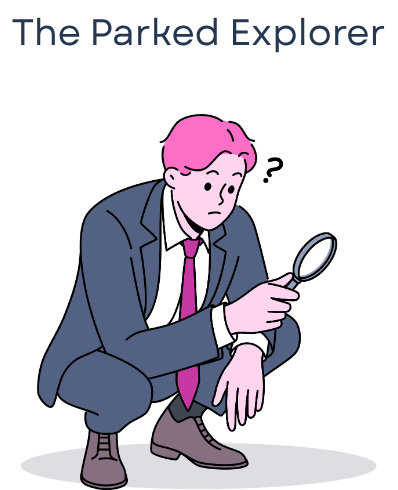 |
Low | Low | Low | Stuck in exploration; no real progress. |
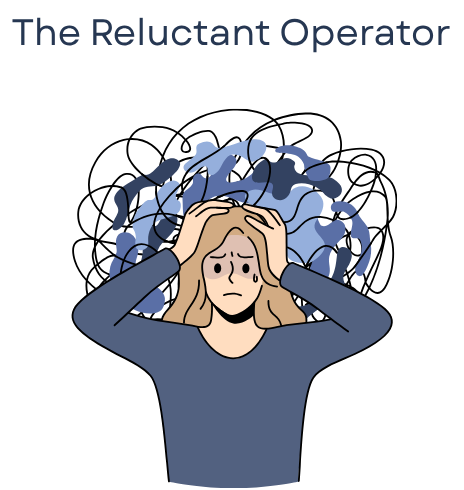 |
High | Low | High | Strong systems, but hesitant leadership and static strategy. |
 |
Moderate/High | Low | Low/Moderate | Governance-heavy; risk management dominates strategy. |
A Closer Look: The Reluctant Operator
This one keeps me up at night—because from the outside, everything looks fine.
The Reluctant Operator has strong systems. Good governance. Budget to tap into. If you ran a maturity assessment of their HR operating model, they'd score well. But leadership is passive when it comes to AI, strategy hasn't accelerated, and the organization is coasting on mature infrastructure without any pressing need to evolve it.
The trap is subtle: Having the tools in place creates the feeling of momentum without the reality of it. Teams get frustrated. Potential gets wasted. And the longer the hesitation goes on, the harder it becomes to build the coalition needed to move.
The best next move for The Reluctant Operator isn't another trial feature or another tech stack assessment–it's a decision: Build a cross-functional AI coalition, set a timestamped acceleration roadmap, and tie AI strategy to measurable business outcomes like retention, agility, performance.
The infrastructure is there. What's missing is the commitment to use it.
Revving Hard, Grinding Gears: Overextended Archetypes
These organizations are moving—you can't accuse them of standing still. But motion isn't momentum. They show real strength in one or two areas: bold leadership, big budgets, genuine enthusiasm for what AI could do. The problem is that weakness somewhere else keeps dragging them off course.
The result is fragile. Pilots flame out. Tools become shelfware. Teams run out of gas before anything scales. And when the ROI conversation eventually arrives—and it always does — the numbers aren't there.
Four archetypes live here:
| Archetype | Capability | Posture | Investment | Snapshot |
|---|---|---|---|---|
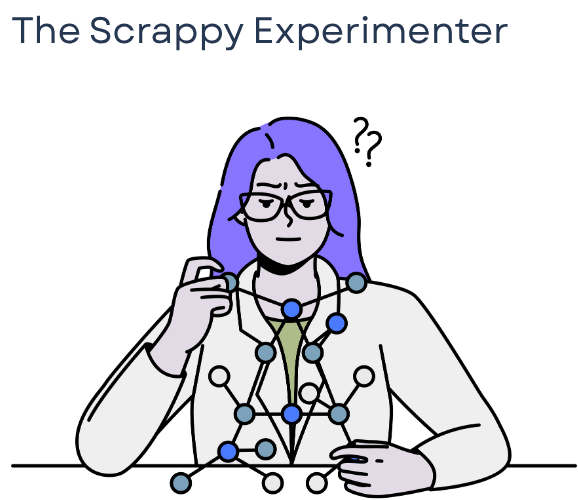 |
Low/Moderate | High | Moderate | Enthusiastic pilots, but weak literacy/governance |
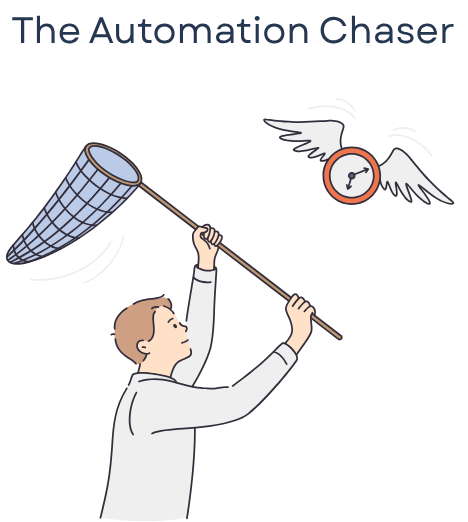 |
High | Low | Moderate | Strong systems, but focused narrowly on efficiency |
 |
Low/Moderate | High | High | Ambitious leaders and big budgets, but weak foundations |
 |
High | High | Low | Ready to move, but momentum blocked by lack of funding/scope. |
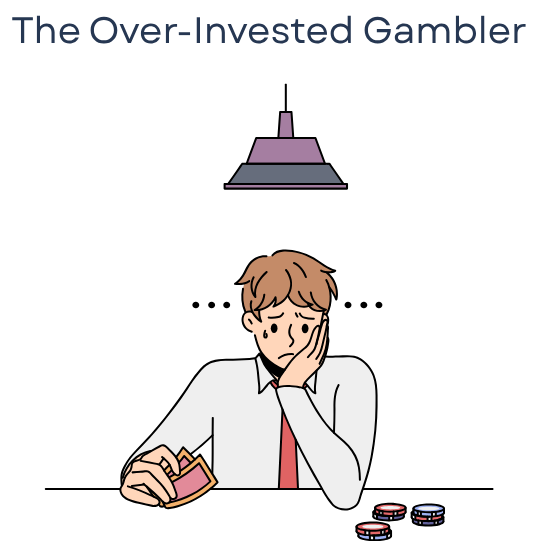
A Closer Look: The Over-Invested Gambler
This is the archetype I see most often in the market right now—and the hardest one for leaders to admit they're in.
Big budgets. Ambitious leadership. Genuine excitement about what AI is going to do for the business. On the surface, this looks like exactly the kind of bold, forward-thinking HR organization we want to see.
But underneath, the foundations aren't there. Literacy is weak. Governance is fragile or nonexistent. Systems are fragmented.
And the tools keep stacking up faster than the organization can absorb–or offboard–them.
I've seen this play out enough times to know how it ends: shelfware, wasted spend, and a credibility hit that makes the next investment even harder to secure.
The hardest thing I can tell a leader in this position is: Stop buying. Pause new purchases, invest in literacy and governance first, then re-sequence the technology rollouts. It feels like going backward. It's actually the only path forward.
Finding Their Rhythm: Momentum-Building Archetypes
These are the rare ones. And I mean rare—our data makes that clear.
These organizations have figured out something that sounds simple but turns out to be genuinely hard: they've gotten capability, posture, and investment moving in the same direction at the same time. AI isn't a project they're running. It's becoming part of how HR operates. They're not perfect—complacency is the real risk at this stage—but they're moving with purpose and pulling ahead of the field.
Three archetypes live here:
| Archetype | Capability | Posture | Investment | Snapshot |
|---|---|---|---|---|
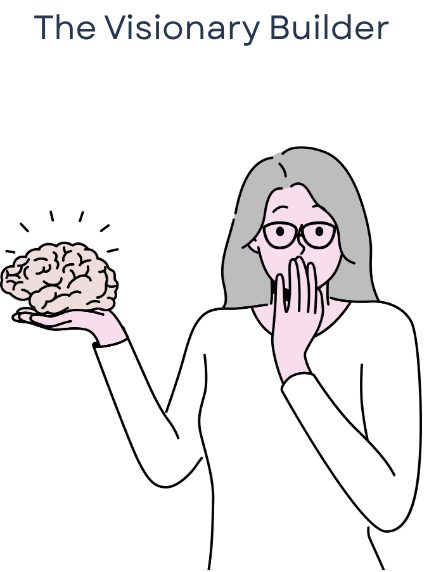 |
Moderate | High | High | Bold strategy and investment, building capability steadily. |
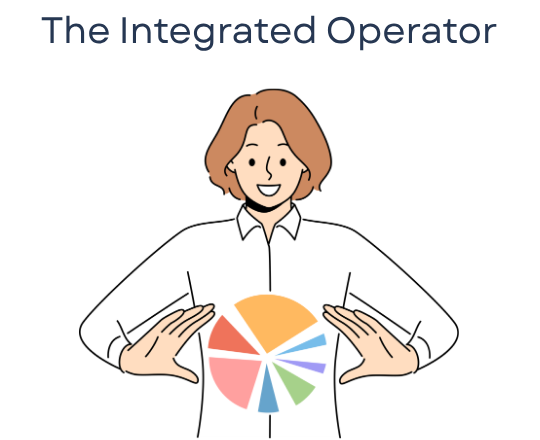 |
High | High | Moderate | Equipped and embedded, scaling strong, still building strategic commitment. |
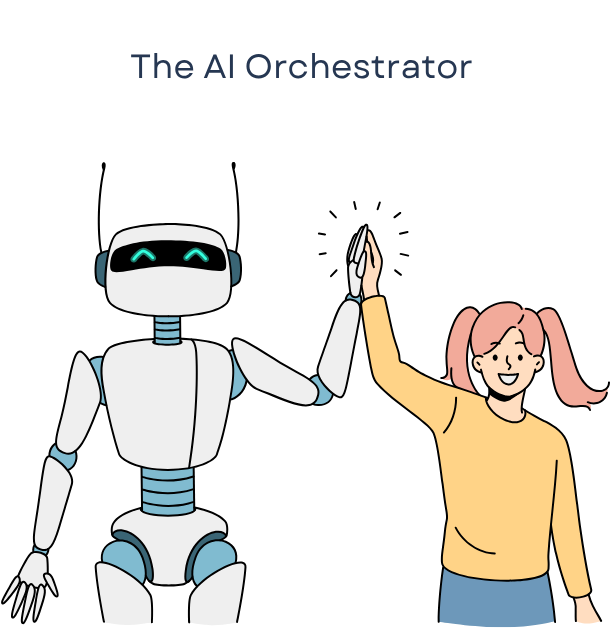 |
High | High | High | Equipped, committed, and resourced. AI fully embedded across HR. |
These three aren't peers—they're a progression. Most readers will find themselves aiming for the AI Orchestrator. The Visionary Builder is the honest on-ramp.
A Closer Look: The Visionary Builder
I spotlight this one because it's the most attainable—and the most instructive.
The Visionary Builder has a bold, clear strategy and real investment behind it. Leadership is committed, the coalition is forming, and the direction is right. Capability is still catching up, but the trajectory is there. This is what it looks like when an organization is genuinely building toward something rather than just talking about it.
The trap here is subtler than in the other categories: Overconfidence.
Momentum feels good, and it can create the illusion that the hard work is done. But gaps in literacy, governance, or integration can stall progress just as surely here as anywhere else—especially as scope expands and complexity increases.
The next move is to keep building, deliberately. Strengthen literacy and integration capabilities. Maintain the coalition—because coalitions erode when they're not actively tended. And don't let governance lag behind ambition. The Integrated Operator and AI Orchestrator aren't that far away. But you don't get there by coasting.
So. What Are You Going to Do About It?
No archetype is permanent. That's the whole point.
The research is unambiguous: exploration is not progress, and inertia is not safe. Momentum is already building somewhere in the enterprise. The question is whether HR will keep up–or fall behind.
The organizations that are building and maintaining momentum—the ones that act with clarity, build real coalitions, and commit resources with intention—won't just unlock AI in HR. They'll shape how AI gets adopted across the entire enterprise.
But none of that starts without knowing where you stand.
The archetypes are a mirror; they're designed to help you see yourself clearly enough to stop circling and start moving. Whether you're a Parked Explorer who hasn't committed to a single pilot, a Reluctant Operator sitting on a foundation you're not using, or a Visionary Builder trying to close the gap to the AI Orchestrator—there's a next move. There's always a next move.
You just have to know which one you are first.