What Is Human?
What's Next for the Human-Centric AI Council
When we opened this year's new Human-Centric AI Council (HCAIC) cohort, I asked members to describe the current state of AI in HR from where they actually sit. Three answers stuck with me.
One had a governance proposal turned down by a well-funded nonprofit. Not on price. The client couldn't tell what they'd be buying.
One had watched a working AI pilot die in front of legal, procurement, and InfoSec, for want of a shared language rather than a business case.
And one offered a frame I've repeated a dozen times since: AI is more like electricity than like a computer. Nobody needs to understand alternating current. They need to know what happens when they flip the switch.
None of that is a technology problem.
A year ago, a group of HR and talent leaders came together to answer one question: What is AI, and what is it about to do to our work? It sounds almost quaint now. It wasn't then. Over twelve months, Cohort Zero built four things the field didn't have:
- An AI Literacy Toolkit and applied learning courseBuilt with CodeSignal
- A Responsible AI Transformation Framework
- An ebook on AI change management
- An AI Solution Evaluation and Design Framework
That was chapter one. And here's the thing... chapter one answered its question well enough that a different one showed up underneath it.
Chapter one of the HCAIC asked what is AI. This chapter asks what is human.
It isn't a philosophical question. It's at the heart of every AI transformation project now that agentic AI is rapidly evolving to do work for humans, with humans, and instead of humans entirely.
What work should humans actually do? Where does judgment genuinely matter? What mindless work do we want to keep anyway, because people need somewhere to decompress between high-impact projects? How do we redesign roles instead of bolting AI onto old ones? What capabilities do we build, and how fast?
Last year our work helped HR leaders navigate what was happening to them. This year it's about helping them lead what's coming.
Four problems put it in front of us. Not one of them is theoretical.
-
HR teams are navigating reductions while the ROI on AI is still unknown.
We're being asked to execute workforce decisions justified by returns nobody has measured yet.
-
Competency frameworks get rebuilt, then blown over by the next headwind.
The traditional cycle is two to four quarters. The market moves monthly.
-
Risk surfaces are now exposed across the entire operating model.
Hiring, performance, comp, employee data... everywhere we're piloting automation or agents. Governance built for annual policy review doesn't cover it.
-
Change fatigue. Not from AI.
From years (decades, honestly) of change programs announced, under-resourced, and quietly abandoned. Our people have watched this movie before. We're paying down a debt we didn't create but do own.
That last one is ours, and I'm including myself in it. Every leader reading this has signed off on at least one transformation that got announced and then starved. The reason people are tired isn't the technology. It's the track record.
Who's in the room: the next cohort of the HCAIC
Senior HR, talent, and people leaders from enterprise, scale-ups, the public sector, and consultancies. Some are veterans of Cohort Zero. Many are new. One member told the group he'd joined because he thought he knew this space and then realized he didn't, which is close to the most useful thing anyone said that day. We're not all AI experts. We're all AI stakeholders.
These are senior people with demanding jobs, volunteering their time, doing work they will not be paid for and cannot put on a P&L. They show up anyway.
It's a working council. Not a conversation club.
The full roster is on the council page.
Who's steering the ship: this year's pillar champions & workstream leads
Two roles driving our agenda again this year, and the difference between them matters.
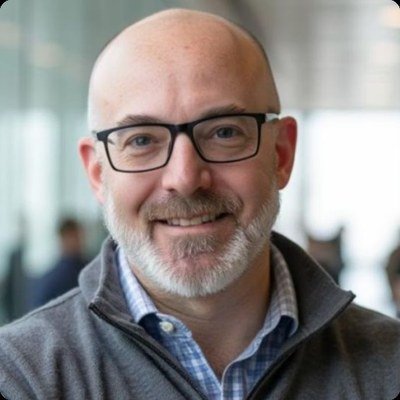
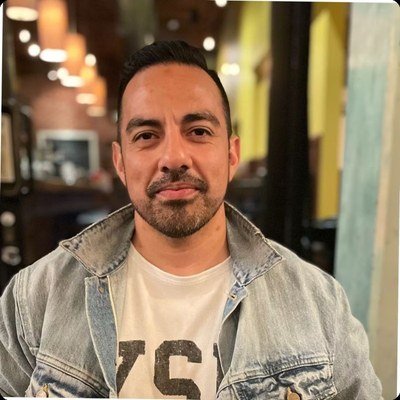
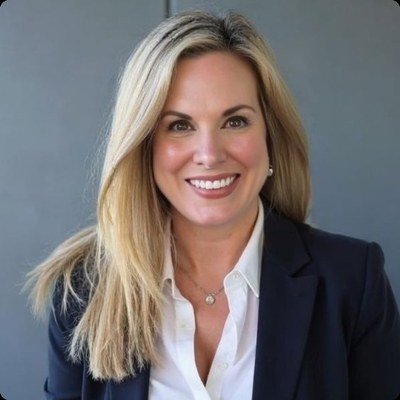
Pillar champions are torchbearers. Workstreams go quiet between deliverables. Pillars never do. Champions keep the conversation alive in market year-round, curate what's worth attention, and make sure everyone aligned to their pillar carries the torch too.
Pillar champions
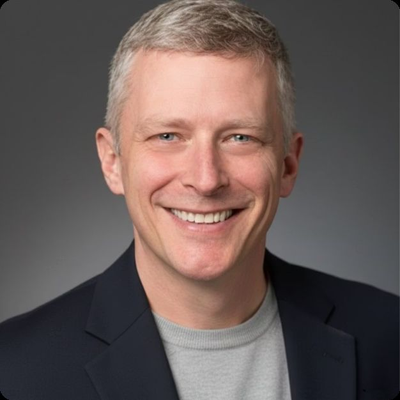



Workstream leads own delivery. They're the R in RACI, accountable for what we publicly commit to. That's a different job from being the foremost expert on a topic. They steer the project, pull in contributors, and decide what makes the cut.
Workstream leads



What we're building: this year's agenda
Five workstreams. Four of them pick up where Cohort Zero set something down.
AI Literacy into Capability
Continues the toolkit that the founding cohort built. A toolkit is a collection of documents. Capability is what happens after someone uses one, and that's a different build: learning pathways, enablement, applied practice. This one is always on. It never finishes.
A Practical AI Governance & Risk Framework
Takes the Responsible AI Transformation Framework we developed and pushes it into operating practice. Governance that accelerates responsible adoption instead of functioning as a permission desk. The operating principle: you do have to go slow to go fast... but you do have to go.
AI's Impact on HR
Turns last year's AI Solution Evaluation work outward. Instead of assessing a solution, we're assessing the work: a human versus AI work map at the task level across HR functions, an impact heat map showing where vulnerabilities and opportunities actually sit, and role redesign guidance grounded in what's really happening.
The Human-Centered HR Operating Model
Where last year's Change Management work goes next. It started as a deliverable inside the Impact workstream and got too big to sit there. The two run in lockstep, with the diagnostic feeding the model, but each needs its own runway. That's why there are five and not four. The agenda moved because the evidence did.
The Human-Centric AI Case Study Program New
The one that's genuinely new. Anonymous-first case studies documenting how the work actually gets done, including what didn't go to plan. It takes the pressure off us to have every answer and puts the spotlight on the people doing it.
Made possible with support: who pays for this, and what they get
Everything this council produces is free and ungated, and that's only possible because someone is paying for it, specifically a select few software vendors who believe in the work enough to invest in it. Underwriters fund the HCAIC so we can provide every resource and best practice free and ungated.
But underwriting is different from sponsorship in some important ways. Here's what that buys them:
What underwriting buys
- Early access to our agenda for the year, including a front-row seat at major industry events like Unleash and Transform.
- Permission to reference and license our frameworks, with attribution, in their own customer education and enablement.
- Logo placement on published assets and at events.
- Invitations to private roundtables, briefings, and council sessions.
- An honest read on what practitioners are actually wrestling with, which is worth more to a product team than most of what they're buying instead.
- The ability to submit practitioner-verified use cases for our library, subject to our editorial standards.
- And co-authorship credit on primers, panels, or workshops they contribute to that meet those same standards.
And just as importantly… what it doesn't
- Underwriters do not choose our focus areas.
- They do not assign our workstreams.
- They have no editorial control over what we publish, and their review rights extend to factual accuracy only.
- There is no purchased recommendation, no endorsement, and no placement as a suggested solution.
- The council's center of gravity stays with the practitioners, permanently, and any underwriter who's talked to me for more than ten minutes has heard me say so.
Credit follows contribution, never the invoice.
And it's not a moral position so much as a structural one. Deep in my gut, I know that the minute this work becomes a channel, it stops being worth funding. And it's more worthy of underwriting than ever before.
Special thanks to our founding underwriters, who we got us started:



And this year's Year Two underwriters (to date)


Come see the work
Our next town hall is Augs=ust 27th, 2026 at 1:00 pm ET, and it's open to anyone, not just council members. The workstream leads will walk through what they're building and what they need. Come with hard questions.
Registration is open · add your name
The gap between what's possible with AI and what's actually working inside HR organizations hasn't closed. If anything, it widened this year. That's the work.
The people doing the work